

Why Are More Caterers and Food Trucks Switching to Waterproof and oil-proof Paper Plates for Their Everyday Service?
Bestree is seeing the same shift shaping foodservice today: Waterproof and oil-proof Paper Plates are becoming a practical choice as caterers and food trucks look for cleaner, safer, and easier everyday service.
For mobile kitchens and catering teams, disposable tableware is rarely a minor detail. A plate has to survive a busy service, hold hot food, handle sauces and greasy dishes, and remain comfortable to carry. At the same time, growing attention to plastic waste and food-contact materials is changing what people expect from disposable tableware.
This is why paper plates are getting a closer look. The latest discussion is no longer simply about replacing plastic with paper. It is about whether paper-based products can deliver the performance needed in real foodservice conditions without relying on materials that create new environmental or handling concerns.
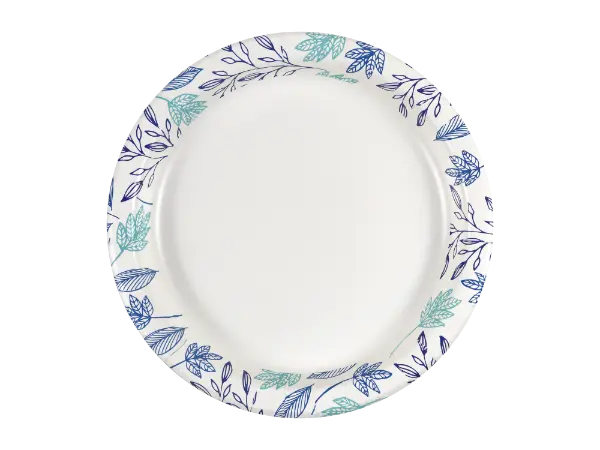
Why Food Trucks Need More From Disposable Plates
A food truck operates differently from a conventional restaurant.
Space is limited. Orders move quickly. Customers may eat while standing, walking, or sitting outdoors. Plates may need to hold burgers, grilled foods, fried items, salads, pasta, desserts, or foods covered with sauces.
A plate that becomes soft after a few minutes can create unnecessary problems.
Oil may soak through the paper. Moisture can weaken the structure. A heavy serving can cause the plate to bend when carried with one hand. These issues may sound small, but during a busy lunch period, they can slow down service and create messy situations.
For this reason, foodservice operators increasingly look at several performance points at the same time:
The practical question is simple: Can a paper plate remain useful after food is actually placed on it?
The Oil and Moisture Problem
Paper naturally absorbs liquids. That characteristic is useful for many paper products, but it is not ideal for serving oily or wet foods.
Consider a typical food truck menu. A plate may need to hold fried chicken with sauce, tacos with salsa, barbecue, noodles, or a burger with dressing. These foods introduce different combinations of oil, water, heat, and weight.
A basic paper plate may perform adequately with dry foods but become less reliable as moisture and grease increase.
This is where Waterproof and oil-proof Paper Plates have gained attention. Their purpose is not simply to make paper look different. The material structure and surface treatment need to work together so that the plate maintains useful strength while reducing the penetration of liquids and oils.
What Happens During Actual Service?
The performance of a disposable plate can change depending on the food placed on it.
| Food Type | Common Challenge | Desired Plate Performance |
|---|---|---|
| Fried foods | High oil content | Improved oil resistance |
| Sauced dishes | Oil + moisture | Combined liquid resistance |
| Hot meals | Heat and moisture | Stable structure during use |
| Salads | Water-based moisture | Reduced absorption |
| Burgers and sandwiches | Weight + grease | Better rigidity |
| Desserts | Moisture and toppings | Surface stability |
This is why one general measurement does not tell the whole story. Everyday foodservice involves several conditions at once.
Why Caterers Are Paying Attention
Catering creates another set of demands.
Unlike a restaurant where a customer may receive a plate and immediately sit at a table, catered food can spend more time being transported, arranged, served, and carried.
A plate may be picked up several times. Food portions may be larger. Guests may stand while eating. Outdoor catering can also introduce additional challenges such as wind, uneven surfaces, and limited access to tables.
A paper plate therefore needs to remain stable throughout the serving process.
For caterers, consistency is particularly important. If one plate performs well but another softens quickly, the issue becomes difficult to manage during large events.
This makes production control an important part of the conversation. Material selection matters, but so do forming processes, dimensional consistency, surface quality, and inspection.
Moving Away From the Old Paper-versus-Plastic Debate
The disposable tableware industry has spent years comparing paper and plastic as if one material automatically solved every problem.
Reality is more complicated.
Plastic can provide moisture and grease resistance, but its environmental impact has increased pressure to find alternatives. Paper offers a familiar fiber-based material, but untreated paper has limitations when exposed to liquids and oils.
The newer approach is more focused on performance without unnecessary material complexity.
Instead of asking whether paper or plastic is better in general, foodservice operations can consider:
- What food will be served?
- How long will the plate need to maintain its structure?
- How much oil or moisture will it encounter?
- What material characteristics are required?
- How does the product fit current sustainability expectations?
This shift makes the discussion more useful because it connects material choices with actual operating conditions.
What Makes a Paper Plate Suitable for Everyday Service?
There is no single feature that determines whether a paper plate is appropriate for foodservice.
Structural Strength
The plate should maintain its shape when loaded with food. This is especially important for meals containing meat, fried products, or multiple ingredients.
Surface Resistance
Oil and moisture resistance help prevent liquids from quickly penetrating the paper. This can improve handling and reduce the likelihood of a plate becoming weak during use.
Edge and Shape Stability
The rim contributes to handling. A stable edge makes it easier for people to carry food without excessive bending.
Production Consistency
Large foodservice operations need predictable products. Variations in shape, weight, surface condition, or forming quality can affect how plates perform during use.
These factors are connected. A strong paper material alone cannot compensate for poor forming, while a well-designed shape cannot completely overcome unsuitable material characteristics.
The Sustainability Question Is Becoming More Practical
Sustainability discussions around disposable tableware are also becoming more specific.
Previously, a product might simply be described as “eco-friendly.” Today, that phrase does not provide enough information. People increasingly want to know what the product is made from, what treatments are used, and how the material performs during its intended use.
The move toward alternatives to conventional plastic and PFAS-related treatments is part of this broader change.
For paper plates, the challenge is to improve water and grease resistance while keeping the product fundamentally practical as a paper-based foodservice item.
This requires attention to the complete product design rather than focusing on one environmental claim.
Where Bestree Fits Into This Industry Shift
Bestree was established in Irving, Texas, in 2022, with a production facility covering approximately 55,000 square feet, including production and warehouse areas. The facility's first production phase became operational in January 2025, while the second phase was scheduled to begin production during the first half of 2026.
The company focuses on disposable paper plates and is supported by a parent organization with nearly 20 years of experience across arts and crafts, paper and stationery, seasonal merchandise, décor, and party products.
Its factory team includes production personnel, engineering support, quality control specialists, management, finance, and business operations. Design and sales teams in Ningbo also provide additional support for product development and global service.
This structure is relevant to the current tableware trend because the transition toward more functional paper products requires more than changing the appearance of a plate. Material selection, forming, inspection, and production consistency all influence the final result.
Bestree's stated operating values—transparency, integrity, efficiency, quality, and innovation—also reflect several of the issues currently shaping disposable tableware development.
A Simple Checklist for Foodservice Applications
Before choosing disposable paper plates for daily operations, it can be useful to consider the following:
| Question | Why It Matters |
| Will the plate hold oily food? | Helps determine the required oil resistance |
| Will hot food be served? | Heat and moisture can affect paper strength |
| Are sauces commonly used? | Combined moisture and oil require better surface protection |
| Will customers carry the plate? | Structural rigidity becomes more important |
| Are large events involved? | Consistent production quality matters at scale |
| Is reducing plastic use a priority? | Paper-based alternatives may better fit the intended direction |
| Are material details important? | Helps support informed foodservice decisions |
This checklist does not replace product testing, but it provides a practical starting point when comparing different disposable tableware options.
Why the Shift Is Likely to Continue
Food trucks and catering operations are under constant pressure to serve food quickly while keeping the customer experience straightforward. Disposable plates need to support that process rather than create another problem.
At the same time, the wider foodservice sector is moving away from solutions that depend heavily on conventional plastics or controversial chemical treatments. That does not mean every paper product is automatically a better option. It means performance, material selection, and production practices are being examined more closely.
The growth of Waterproof and oil-proof Paper Plates reflects this more practical approach. The objective is to retain the convenience of disposable tableware while improving resistance to the foods that commonly cause paper plates to fail.
For caterers and food trucks, the decision ultimately comes down to everyday use: a plate needs to hold the meal, resist the mess, remain stable in the customer's hands, and fit the direction of modern foodservice.
As these expectations continue to develop, Waterproof and oil-proof Paper Plates are becoming part of a wider transition in disposable foodware. With its focus on paper plate production, quality control, efficiency, and product development, Bestree is participating in this shift toward more functional paper-based tableware for everyday foodservice applications.
Send Inquiry
-
E-mail